How Long Does Drug Rehabilitation Take?
The length of a rehabilitation programme depends on the substance involved, the severity of dependence, and whether co-occurring mental health conditions are present. There is no single correct answer, but the following timelines reflect the most common programme structures:
- 28-day programme: A short-term residential option that covers medically managed detox and the initial phase of therapeutic work. Suitable for individuals with moderate dependence and a strong support network at home.
- 60-day programme: Allows more time for deeper therapeutic work, including trauma processing and the development of relapse prevention skills. Recommended for individuals with a history of previous treatment or more complex needs.
- 90-day programme: The most clinically supported duration for individuals with severe dependence, long-term addiction histories, or significant co-occurring mental health conditions. Research consistently shows that longer treatment duration is associated with better long-term outcomes.
- Secondary care phase: Following primary residential treatment, a secondary care programme provides continued structure and support during the transition back to daily life. The duration is agreed upon between the client and the clinical team.
Your admissions assessment will give you a clearer indication of the recommended duration for your specific situation. The goal is always to give you the best possible chance of lasting recovery, not simply to complete a fixed number of days.
Types of Drug Rehabilitation Available
Rehabilitation options in South Africa range from brief counselling to extended residential programmes, and understanding the differences helps you choose the right level of care.
Medical Detox
Medical detox is the first stage of treatment for many clients. It involves supervised withdrawal from substances under clinical care, with medication used where appropriate to manage symptoms and reduce risk. Detox alone is not a complete treatment for addiction; it is the starting point for the therapeutic work that follows.
Residential Rehabilitation
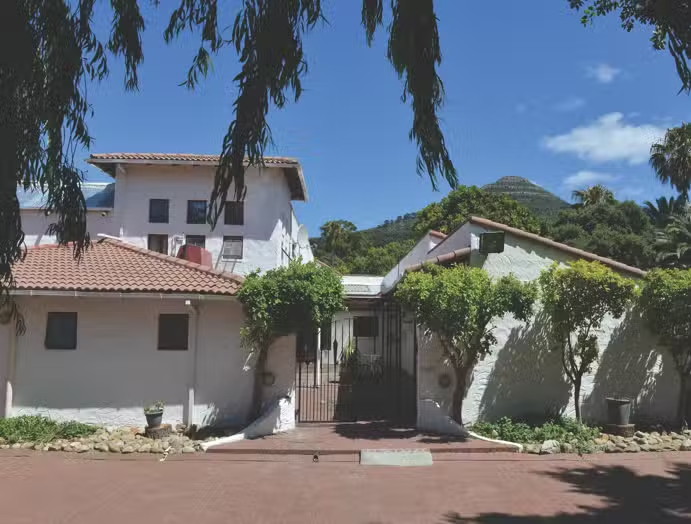
Residential rehabilitation means living at the treatment facility for the duration of the programme. This level of care provides the most structured and intensive support, removing clients from the environments and relationships associated with active substance use. Harmony Clinic offers fully residential rehabilitation in Hout Bay, Cape Town, for clients from Durban, KZN, and across South Africa.
Step-Down and Secondary Care
Step-down or secondary care is a structured transitional programme that follows primary residential treatment. It provides continued therapeutic support, relapse prevention planning, and practical life skills development as clients prepare to return to independent living. This phase is a key part of the recovery continuum at Harmony Clinic.
Treating Addiction and Mental Health Together: Dual-Diagnosis Care
Many people who struggle with substance addiction are also living with an undiagnosed or untreated mental health condition. Depression, anxiety, trauma, mood disorders, and personality disorders frequently co-occur with addiction, and in many cases one condition drives or worsens the other.
At Harmony Clinic, our dual-diagnosis treatment approach means that both conditions are assessed and treated at the same time, within the same programme. If you enter treatment for heroin addiction and our clinical team identifies that you are also living with post-traumatic stress or a mood disorder, your treatment plan will incorporate evidence-based interventions for both conditions.
The mental health conditions we treat alongside addiction include:
- Anxiety disorders
- Trauma and PTSD
- Mood disorders, including depression and bipolar disorder
- Personality disorders
- Adjustment disorders
- Psychotic disorders
Each client receives a thorough clinical assessment on admission, and the treatment plan is updated as the programme progresses. This integrated approach is a significant differentiator between a private facility with dual-diagnosis capacity and a standard counselling service. If you or your loved one has a history of mental health difficulties alongside substance use, please mention this during your initial call so that our admissions team can ensure the right clinical support is in place from day one.
Medical Aid Cover for Drug Rehab in Durban and KZN
Most medical aid schemes in South Africa provide some level of cover for private addiction rehabilitation. This typically includes costs associated with inpatient residential treatment, medically managed detox, therapy sessions, and medication management. The specific benefits available to you will depend on your scheme and plan option.
Harmony Clinic works with a range of associated medical aids to help clients access the cover they are entitled to. Our admissions team can assist you in verifying your benefits before you commit to treatment, so you have a clear picture of what your scheme will contribute and what, if any, out-of-pocket costs may apply.
Medical aids that commonly cover addiction rehabilitation in South Africa include schemes administered by major providers across the country. When you contact us, please have your medical aid membership details available so that our team can check your benefits promptly. Pre-authorisation is typically required before admission, and our administrative team will manage this process on your behalf.
If you do not have medical aid cover, self-pay arrangements are available. Speak to our admissions team for further information about payment options.
How to Access Treatment from Durban: The Admissions Process
If you are based in Durban or KZN and are considering treatment at Harmony Clinic, the process is straightforward. Distance is not a barrier, and our team is experienced in supporting clients who are travelling from outside Cape Town.
- Initial contact: Call us on +27 21 790 7779 or use the contact form on our website. This first conversation is confidential and carries no obligation. Our admissions team will ask about your substance use history, any co-occurring health conditions, and your current circumstances.
- Clinical assessment: Based on the information you provide, our clinical team will recommend the most appropriate level of care and programme duration. If dual-diagnosis treatment is indicated, this will be factored into your programme from the outset.
- Medical aid verification: If you have medical aid cover, our team will contact your scheme to confirm your benefits and obtain pre-authorisation for admission.
- Travel arrangements: Our admissions team can advise on travel options from Durban to Cape Town. Many clients fly into Cape Town International Airport, from where transport to Hout Bay can be arranged. The journey from the airport to the facility takes approximately 40 minutes.
- Admission: On arrival at Harmony Clinic, you will be welcomed by our clinical team and begin the formal intake process, including a medical assessment and orientation to the facility and programme.
The entire process from first contact to admission can often be completed within a few days. If you or your loved one is in crisis, please call us immediately so that we can prioritise your assessment.